
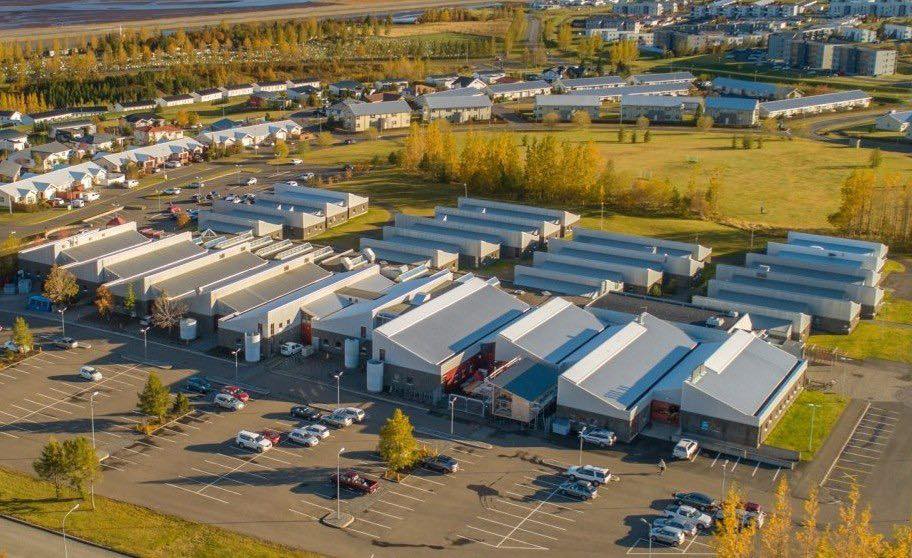
The first Erasmus+ GREEN project mobility took place in Akureyri from 11. to 15. 05. 2026, bringing together students and teachers from the Netherlands, Portugal, Croatia, Turkey, and Iceland. The host institution was Verkmenntaskólinn á Akureyri. The mobility focused on renewable energy systems, energy efficiency, and sustainable development through a combination of expert lectures, field visits, and collaborative student work.
Day 1 – Introduction to the project and Icelandic sustainability practices
The first day began with an official welcome, presentation of the project activities, and introduction of all participating national teams. Students and teachers shared information about their schools and cities, creating a strong foundation for international cooperation.
A key highlight was the lecture delivered by experts from the Icelandic Environment and Energy Agency, who presented Iceland’s national approach to sustainability. Participants learned how Iceland relies heavily on renewable energy sources, particularly geothermal and hydropower, while also addressing energy challenges in remote areas where grid access is limited. The discussion included innovative solutions such as wind turbines, solar panels, battery systems, and subsidized heat pumps.
Day 2 – Geothermal energy and district heating systems
The second day focused on Iceland’s geothermal energy infrastructure. Representatives from RARIK introduced the national system for geothermal heat distribution in northern Iceland.
Participants learned how deep geothermal wells (up to 1,800 meters) are used to extract hot water naturally heated by the Earth. This water is then distributed through pipeline systems to households. The system is highly efficient due to the purity of geothermal water, which contains minimal minerals and oxygen, reducing corrosion and maintenance issues.
The day also highlighted sustainability challenges, including the current practice of releasing cooled water into the sea, and ongoing efforts to develop closed-loop systems for improved energy efficiency.
Day 3 – Field trip: energy production and natural wonders
The third day was fully dedicated to field-based learning. The group visited Goðafoss, followed by the hydroelectric power plant Laxárvirkjun and the geothermal power plant Þeistareykir Power Station. At Þeistareykir, geothermal water reaching temperatures of up to 178°C drives steam turbines producing electricity, demonstrating Iceland’s strong reliance on renewable energy.
In the afternoon, participants explored the town of Húsavík, known for whale watching, and visited the geothermal area Hverir near Lake Mývatn. The group observed active geothermal features such as fumaroles, mud pools, and mineral-rich landscapes with vivid colors caused by sulfur and other elements.
The day concluded with a visit to Dimmuborgir, a dramatic lava field formed around 2,300 years ago, followed by relaxation at Forest Lagoon.
Day 4 – Icelandic culture, energy systems, and student project work
The fourth day began with a presentation on Icelandic horses, an iconic symbol of Icelandic heritage. Participants learned about their historical importance, unique characteristics, and genetic isolation that has preserved the breed for centuries.
This was followed by an in-depth presentation of Iceland’s national energy system, highlighting how geothermal and hydropower sources provide almost 100% of the country’s electricity and heating needs.
Students then continued working in international teams on their project tasks. They developed video content and practical proposals for improving energy efficiency in different environments, including the host school Verkmenntaskólinn á Akureyri, a local farm, a data center, and the Forest Lagoon. Their work focused on identifying realistic strategies for energy savings and sustainable improvements.
Day 5 – Final presentations and certification ceremony
The final day was dedicated to the presentation of student video projects. International teams showcased their creative solutions and ideas for improving energy efficiency and sustainability. The presentations reflected a strong level of cooperation, creativity, and technical understanding developed throughout the week.
After the presentations, a formal certificate ceremony was held to celebrate the successful completion of the mobility. Participants received recognition for their engagement, collaboration, and contribution to the project.
The mobility concluded with emotional farewells and reflections on the week’s experiences, with participants already looking forward to the next meeting scheduled in the Netherlands in October.
The GREEN project mobility in Iceland provided an exceptional learning experience combining theory, practice, and field exploration. Participants gained first-hand insight into Iceland’s advanced renewable energy systems and natural environment while developing key competencies in sustainability, teamwork, and intercultural communication.
The experience significantly contributed to strengthening European cooperation and raising awareness about the importance of sustainable energy solutions for the future.


